Outreach

We believe that science is worth sharing.

STEM outreach has been a core part of the IRM since the beginning. Through partnerships with schools, universities, and nonprofit organizations, our staff and researchers teach K-16 students in the Philadelphia area scientific skills and provide them with exciting and accurate information about regenerative biology. Our reach is also global through award-winning programs like Project BioEYES – which has impacted over 130,000 students across three countries so far.

We strive to provide opportunities to build communication and teaching skills for faculty, trainees, and students. IRM staff members can also support your drive to engage with the community and assist with including this work in your research proposals.

Get involved in our successful STEM outreach programs today!
[tm-custom-heading text=”Learn about our STEM outreach” font_container=”tag:h3|text_align:left”]
[tm-custom-heading text=”Outreach News” font_container=”tag:h3|text_align:left”]

Review of uterus transplants in the U.S. shows success in allowing women to achieve live birth

Uterus transplant programs across the US have led to dozens of healthy births. A new review published in Obstetrics & Gynecology summarizes the outcomes from 60 uterus transplants that took place over the course of a decade at the four U.S. locations offering the procedure. It includes data on outcomes for surgical, reproductive, neonatal, and […]

Project BioEYES featured for nearly 25 years of impactful science education!

Dr. Jamie Shuda has spent nearly 25 years introducing students to science through Project BioEYES. What started in her own classroom has grown into a remarkable program to bring science into the lives of thousands of students across Philadelphia. Dr. Shuda’s work and BioEYES are a core component of the IRM’s outreach mission. Her programs […]

IRM Awards 6th Elaine Redding Brinster Prize to Svetlana Mojsov, PhD & Lotte Bjerre Knudsen, DMSc

The Institute for Regenerative Medicine at the University of Pennsylvania is has awarded the 2027 Elaine Redding Brinster Prize in Science or Medicine to Drs. Svetlana Mojsov and Lotte Bjerre Knudsen for the discovery of GLP-1 (7-37) as the physiologically active form of the peptide (Dr. Mojsov) and the development of modified GLP-1 (7-37) that […]

A translational approach to airway reconstruction leveraging decellularized meniscus and cartilage progenitor cells

A team of researchers led by IRM faculty member Riccardo Gottardi, PhD, recently published in Nature Communications. Their work explores a novel scaffolding approach to improve surgical treatment of severe subglottic stenosis in infants. Existing surgical treatments for young children are challenging due to the patients lacking the necessary costal cartilage for laryngotracheal reconstruction to […]

TRF2 couples muscle stem cell identity to regenerative repair

A team of researchers led by IRM faculty member Foteini Mourkioti, PhD, have been published in Science Advances for their discovery of a previously unrecognized role for TRF2 in preserving muscle stem cell identity and enabling muscle regeneration. Their findings change how we think about this classic telomere protein and opens new directions for understanding […]

Generation of spermatogonia from human and non-human primate pluripotent stem cells

A team of researchers led by IRM faculty member Kotaro Sasaki, PhD, MD, and Eoin Whelan, PhD recently published in Cell Stem Cell on their work to address male infertility.  In the paper, titled Generation of spermatogonia from human and non-human primate pluripotent stem cells, they report on a procedure that allows them to generate […]

Molecular Cell: Nucleosomes as active platforms for pioneer factor action

The most recent issue of Molecular Cell features a new publication based on a collaboration between Dr. Ken Zaret, IRM Director, and Dr. Yawen Bai of the NIH Center for Cancer Research. Their research assessed how the pioneer factor Ascl1-E12a leverages distinct associations with nucleosomes to open chromatin and reprogram cell fate. The work, published […]

Transcription and cohesin direct domain boundary spatial positioning and are linked to Friedreich’s ataxia

A team of researchers, led by IRM faculty member Dr. Rajan Jain, have been published in Molecular Cell for their research showing that transcription and cohesin play a critical role in the spatial positioning of lamina-associated domain (LAD) boundary genes. Further, they demonstrate that improper positioning of the LAD boundary gene FXN in Friedreich’s ataxia is due […]

Ken Zaret, Ph.D., IRM Director, Awarded 2026 University of Pittsburgh George K. Michalopoulos Endowed Lecture and Award

The Michalopoulos Endowed Lecture and Award recognizes outstanding scientists whose discoveries and sustained contributions, particularly in areas inspired by Dr. George K. Michalopoulos’s legacy in liver biology, regeneration, and disease, have significantly advanced scientific understanding and continue to influence future generations of researchers. Congratulations to Dr. Zaret for this achievement. You can find more information […]

Modeling human prenatal adrenocortical functional zonation dynamics from pluripotent stem cells

A team of researchers led by IRM faculty member Kotaro Sasaki, PhD, MD, and Michinori Mayama, PhD, MD, have recently been published in Cell Stem Cell for the development of an organoid system that models the complex tissue structure, development, and function in the developing human adrenal cortex. This work lays the foundation for research on […]

Give


What better way to give than to support the next generation of researchers! $20 allows a city student to become a SCIENTIST through Project BioEYES! 

Giving Link: http://givingpages.upenn.edu/projectbioeyes

Offer a Summer Research Internship


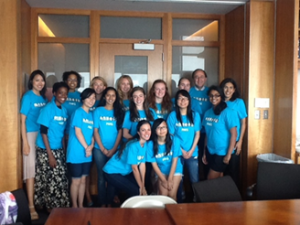
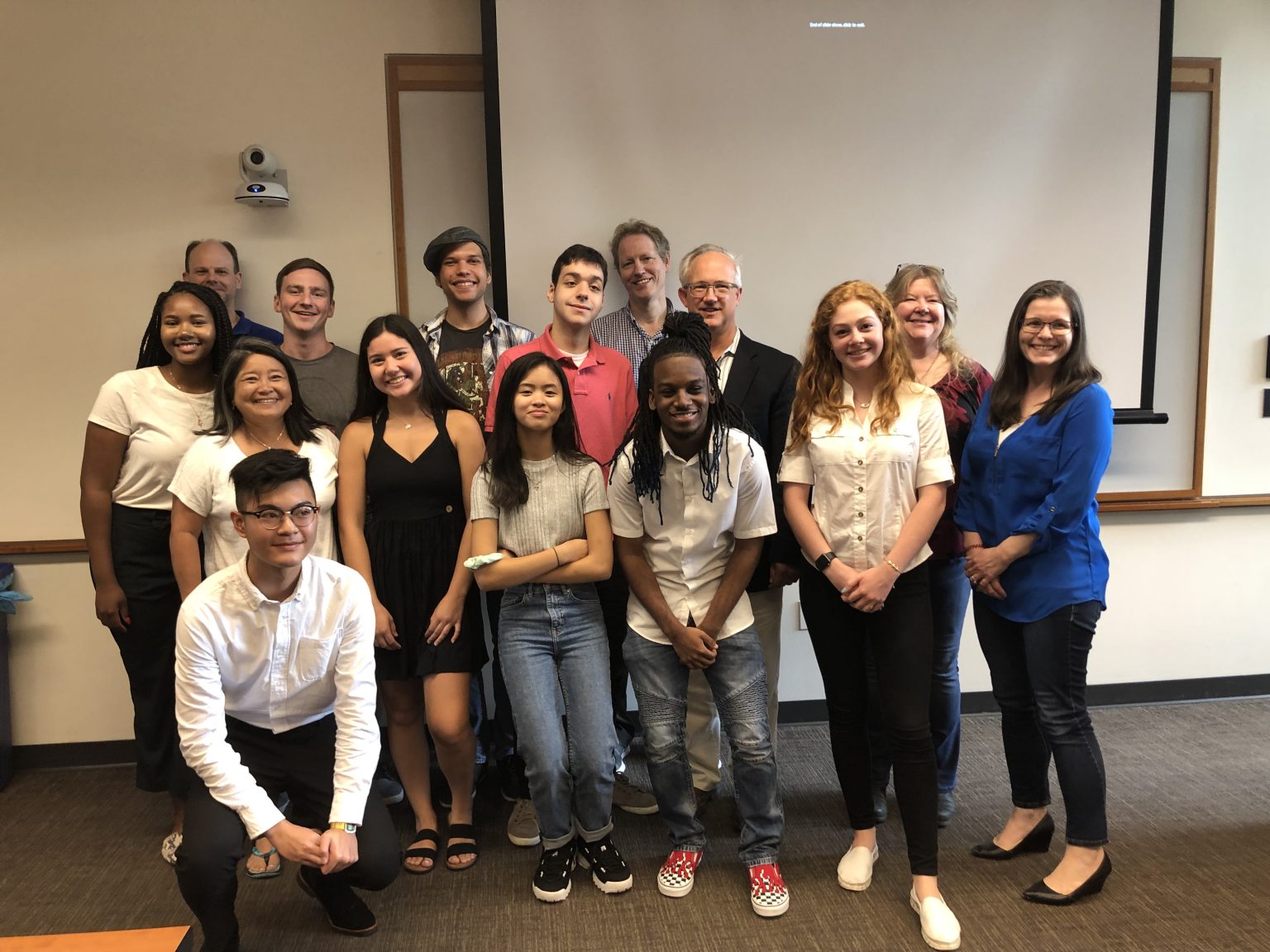
PSOM’s Office of Outreach, Education, and Research (OER), in partnership with the IRM, is excited to offer a summer research internship to local high school students. Last year we had our largest cohort yet, with 25 interns representing 11 Philadelphia schools. Four of the students are current or Fall 2023 Penn Quakers!

In order to keep this pipeline going, we are now recruiting summer 2023 laboratories and mentors.

Summer 2023 details include:

* This is a 6-week summer research experience, from June 26 – August 4th, 2023.

* Each student will gain basic laboratory skills through a 16-hour spring program to best prepare them for the summer.

* Students will be hired and paid by the university, with no financial obligation from you.

* Labs will get $500 to support supplies.

* Mentor training and planning meetings will be held before and during the internship.

* Mentors are required to complete state-mandated clearances (unless completed in the last 5 years) which our office will facilitate.

* Direct mentors can be you, a postdoc, graduate student, or lab staff (more than one mentor is also ok).

* All students will be required to show proof of vaccination.

If your lab is interested in hosting a student, please email Tarence Smith, OER Program Manager, at tarence.smith@pennmedicine.upenn.edu by February 17th. Final placements will depend on the number of high school students that are available, but our goal is 25!

If your lab participated in Summer 2022, thank you so much! You may have the opportunity to host your student again. Please let Tarence know if you would be interested in bringing your summer researcher back. This is not guaranteed.

I thank you in advance for your time and energy in paving a path for the young, talented researchers in Penn’s own backyard.