About the Elaine Redding Brinster Prize in Science or Medicine
The Elaine Redding Brinster Prize in Science or Medicine is presented annually to honor internationally recognized individuals from any country for a foundational scientific discovery and its major impact on biomedicine. The Prize is administered by the Institute of Regenerative Medicine (IRM), Perelman School of Medicine at the University of Pennsylvania, and is made possible through the generous support of the children of Ralph Brinster and Elaine Redding Brinster.
Each prize includes a $250,000 award, a commemorative medal, and an invitation to present a ceremonial lecture to the University of Pennsylvania campus community.
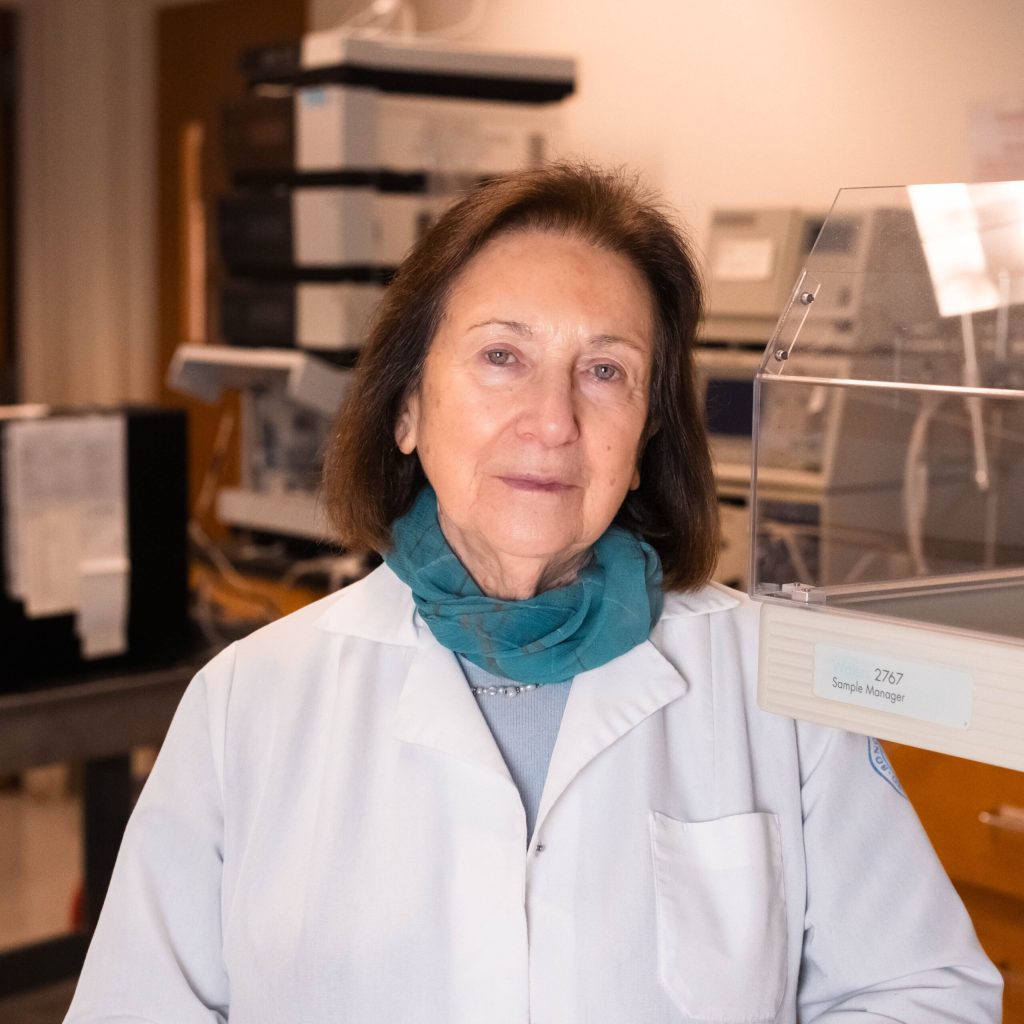
Svetlana Mojsov, PhD (The Rockefeller University)
Lotte Bjerre Knudsen, DMSc (Aarhus University)
The Institute for Regenerative Medicine at the University of Pennsylvania is pleased to announce their awarding of the 2027 Elaine Redding Brinster Prize to Drs. Svetlana Mojsov and Lotte Bjerre Knudsen for the discovery of GLP-1 (7-37) as the physiologically active form of the peptide (Dr. Mojsov) and the development of modified GLP-1 (7-37) that enabled its therapeutic use for treating diabetes and obesity (Dr. Knudsen). The discovery of GLP-1(7-37) and the development of related stable pharmaceuticals has led to fundamental changes in medical treatments for chronic, obesity-related illnesses.
In the early 1900’s, an extract from the gut, named “incretin”, was found to be able to lower blood glucose. Subsequent studies in the 1960s and 1970s demonstrated that healthy volunteers who received glucose orally resulted in higher levels of insulin, in the so-called incretin effect, compared to those who had received intravenous glucose. Also in the 1970s, interest grew in glucagon, a pancreatic hormone that increases blood sugar concentrations. Dr. Joel Habener discovered that in fish glucagon is a cleavage product of a precursor protein that encodes a second, similar peptide; others then found the second peptide in mammals. The second peptide was dubbed glucagon-like peptide-1, or GLP-1(1-37).
Dr. Svetlana Mojsov had independently been investigating glucagon biology using solid phase protein synthesis techniques developed by her mentor, Dr. Bruce Merrifield. She encountered challenges, leading to her developing a novel set of chemical methods. The new chemical methods are still in use today for synthesizing glucagon variants.
Dr. Mojsov joined the Endocrine Unit at Mass General Hospital when the discovery of GLP-1(1-37) was announced. There was suspicion that the peptide would serve a biological function, based on its conservation across species, but initial studies failed to reveal an effect on insulin production and its function remained unknown. Dr. Mojsov identified a potential cleavage site in mammalian GLP-1(1-37) that would create a 31-amino acid peptide, which she believed could be the active form of GLP-1. Through careful synthesis, Dr. Mojsov produced the smaller version of the molecule, GLP-1(7-37) and antibodies against it, leading to experiments which confirmed the presence of GLP-1(7-37) in the intestine. Her resulting publications in 1986 and 1987 with Habener laid the framework for understanding the role of GLP-1 in inducing insulin production, as further studied by Drs. Daniel Drucker and Jens Juul Holst among others.
Yet GLP-1(7-37) breaks down in the blood within minutes, presenting a challenge for using it as treatment. Dr. Lotte Bjerre Knudsen and her team at Novo Nordisk sought to maximize its half-life to improve therapeutic utility. They attached a small fatty acid molecule to GLP-1, allowing it to ‘hitch a ride’ on a transport protein in the blood and persist long enough to function as a therapeutic. Through careful and systematic experimentation over the course of 20 years, they refined this approach to create liraglutide, the world’s first once-daily GLP-1-based medicine, giving millions of people with diabetes an effective new treatment.
One of Dr. Knudsen’s most important contributions was revealing how these medicines work in the brain. Her team demonstrated that liraglutide, injected under the skin, can reach key areas in the brain that control hunger and food intake, activating “fullness” signals and dampening those that drive hunger. This was a crucial finding, because it showed that GLP-1 medicines work very differently from older weight loss drugs that interfered with mood-related brain pathways and caused serious heart problems.
Drs. Mojsov’s and Knudsen’s work paved the way for the GLP-1 drugs, revolutionizing how people around the world are treated for obesity and Type 2 diabetes. Many scientists are exploring the benefits of using these medications for other chronic diseases, including heart failure, chronic liver disease, substance abuse disorders, and more. There remains substantial work to be done for these new treatments, but the results could fundamentally alter options for many patients. The combined efforts of Drs. Mojsov and Knudsen have had far-reaching clinical impacts, and there is promising evidence that this is only the beginning of our scientific and clinical understanding based on their GLP-1 research.
Drs. Mojsov and Knudsen will accept the prize on March 17, 2027, as part of the day-long Ralph L. Brinster Symposium. The symposium will feature eminent speakers from across the biomedical sciences, including:
- Cliff Brangwynne, PhD, Director of the Omenn-Darling Bioengineering Institute and June K. Wu Professor of Chemical and Biological Engineering at Princeton University;
- Charlie Rice, PhD, Maurice R. and Corinne P. Greenberg Professor in Virology at The Rockefeller University;
- Ruth Lehmann, PhD, Director and Professor of Biology in the Whitehead Institute at the Massachusetts Institute of Technology.
Details on registration for both in person and remote attendance will be coming soon!

About the Ralph L. Brinster Symposium
Held in conjunction with the Prize, the annual Ralph L. Brinster Symposium is a celebration of extraordinary science. Each year, leaders in biomedicine from around the globe are invited to present their research to the University of Pennsylvania community. Rather than focus on one topic area or discipline, the Symposium hosts speakers whose work has helped shape biomedical science broadly, just as Dr. Brinster’s research into transgenic animals revolutionized the field.
The Symposium is cosponsored by the Deans of the School of Veterinary Medicine and Raymond and Ruth Perelman School of Medicine